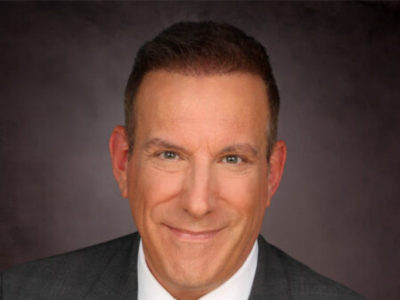
Former Mayor Gregg Hull wins Republican nomination for New Mexico governor
News > Politics & Government News


Audio By Carbonatix
Tuesday, June 2
By SUSAN MONTOYA BRYAN and SAVANNAH PETERS
ALBUQUERQUE, N.M. (AP) — Republican Gregg Hull, the former three-term mayor of one of New Mexico’s largest cities, has won his party’s nomination in the governor’s race.
Hull beat two Republican challengers — public relations professional Doug Turner and former state Cabinet secretary Duke Rodriguez.
“We ran a campaign that focused on the issues, a campaign that focused on who we were and not a campaign that attacked or tore people down," Hull told a crowd that gathered to watch the results roll in. "We did it right.”
Hull said he knows families are hurting and that one-party control in New Mexico has failed. He vowed to give voters a “real choice.”
“This fall, we will face Deb Haaland in the general election, and we’re going to win,” Hull said. “And I respect that she has served in various positions over her career, but New Mexico families are hurting, and the policies of the last eight years under one-party control of this state have failed.”
Former Interior Secretary Haaland won the Democratic nomination for New Mexico governor, giving her a path to become the first Native American woman in the U.S. elected to the office.
Haaland celebrated Tuesday night at a historic plaza in Albuquerque’s Old Town neighborhood, where supporters gathered for a mariachi band, traditional hoop dancing and a prayer in Tiwa, one of many Native languages spoken among tribes in the state.
“I’m the only candidate who has been a single mom," Haaland said. "I’m the only candidate who worked across the aisle in Congress and got bills signed into law.”
Under President Joe Biden, Haaland championed public lands conservation and oversaw a first-of-its-kind federal investigation into the abuse of Native American children at government-run boarding schools. In 2018, the citizen of Laguna Pueblo made history as one of the first two Native American women elected to Congress.
While voters will decide primaries in three congressional seats, a U.S. Senate seat and a long list of statewide offices, the governor’s race is the main attraction. The winner of the November general election will succeed Democratic Gov. Michelle Lujan Grisham, who reached her term limit.
New Mexico has trended left in recent years, and Democrats have won every statewide elected office since 2017.
New Mexico is grappling with high rates of violent crime, chronically underperforming schools and cuts to federal programs that are key safety nets for residents.
“Our challenges today are not new but we must come to the table with new solutions," Haaland told her supporters Tuesday night. “Everything is getting more expensive. The state will step up to put more money back in your pockets."
Despite the state's persistent challenges, the primary election comes at a time of promise for the next governor. Surging oil prices caused by the Iran war have translated into an influx of tax revenue to state coffers. New Mexico is the nation’s second-largest oil-producing state behind Texas, and the industry’s revenue funds an array of progressive social programs that include universal childcare.
For the first time, the primary was open to voters who are independent. The state’s semi-open primary system, which was signed into law by Lujan Grisham last year, allows the roughly 23% of New Mexico voters who are not affiliated with a political party to request either a Democratic or Republican ballot.
On the campaign trail, Haaland focused on reducing costs for families while emphasizing her ancestral roots in the state and experience in the nation’s capital.
She made her first stop Tuesday at San Felipe Pueblo, a Native American community north of Albuquerque.
Meredith Ansera, a project coordinator with the pueblo, said she worked with Haaland during her tenure as a tribal administrator who helped oversee education and childcare programs.
“She knows what our needs are and she’s been there,” Ansera said.
Ann Chavez Barudin traveled 40 miles (64 kilometers) from Santo Domingo Pueblo to attend Haaland's event Tuesday. She said she has followed Haaland’s ascent in national politics and supports her run for governor because of her promises to fill gaps left by Trump administration cuts to social safety net programs.
“I have confidence that she will stand up for Medicare,” said Chavez Barudin, who is a Medicare recipient herself and cares for her older mother who relies on the program.
Haaland defeated Sam Bregman, an Albuquerque-based district attorney and the father of Chicago Cubs All-Star Alex Bregman, who campaigned on a promise to curb violent crime.
“This campaign may be over, but my commitment to the people of New Mexico is not,” he wrote in a statement to The Associated Press.
He criticized Haaland after her name appeared in the Jeffrey Epstein files. She flew on a private jet chartered by one of Epstein's companies during her 2014 unsuccessful bid for lieutenant governor. That flight to a fundraising meeting in Washington, D.C., was paid for by Gary King, her running mate at the time. King's family had sold Epstein a ranch in New Mexico two decades earlier.
Haaland said she was unaware of Epstein’s role in arranging the flight and never met him.
Hull was mayor of fast-growing Rio Rancho and has pointed to his leadership there as a blueprint for how he would govern. He has promised to promote economic growth and attract large employers to New Mexico, where poverty rates are among the highest in the nation and wages among the lowest.
He defeated Turner, whose campaign focused on plans to lift the state’s public education system from the bottom of national rankings, and Rodriguez, who focused on stabilizing the state’s healthcare system, which faces financial troubles and a severe shortage of physicians.
The winner of November's general election will inherit the oil windfall in the state budget that has led to competing ideas on how best to use it — from cutting one-time checks for taxpayers to funding tax credits that would mostly aid low-income residents to eliminating the state's income tax.
The state's reliance on fossil fuels to fund its programs also has proved politically sensitive for Democrats.